
If you’ve ever wondered why AcroYoga feels so good, it’s because the practice blends movement, connection, trust, and joy in a way few other activities do. Each session invites you to be present with yourself and with others, building confidence through play and clarity through collaboration. The benefits stay with you long after class ends, shaping your strength, your relationships, and your sense of what your body can do. Here’s a few things we think AcroYoga adds to your life:
Learning to Play Again
We can probably all agree that AcroYoga brings out your inner child, the worry-free playfulness we know from our childhood and that often gets lost in the grind of everyday (work) life. Yet play has such an energizing and freeing effect on our minds and bodies. We believe it’s one of the aspects of AcroYoga that gets people addicted.
Coordination and Body Awareness
You will train a lot of muscles in ways that you probably haven’t tried in your usual movement practice. Core stabilization, isometric exercises coupled with moving your limbs in crazy ways as well as learning to feel your body in space, i.e. proprioception. It’s a whole new experience for both the base and the flyer.
Confidence Boost
Whether it’s providing a strong platform to your flyer, trusting your base to catch you after a throw, or ensuring a safe practice as a spotter – you’ll learn a whole set of tools and skills that will boost your confidence in your body, your strength, your ability to support someone or catch yourself from a fall. There’s a magic to learning how to trust your body to do these things, and they definitely translate into everyday life.
Improved Communication
Whether you want it or not, AcroYoga will teach you to communicate your boundaries and your needs, and it will teach you how to communicate effectively while incorporating different perspectives. Just think about this: The base generally ’sees‘ what’s happening, the flyer predominantly ‚feels‘ what’s happening. Now guess what will happen when these two perspectives try to find common ground.
Flexibility and Strength
«But I’m not flexible enough!», «I don’t think I’m strong enough to base this.» – We’ve heard it all before and we know where you’re coming from. Fact is: We all have to start somewhere, we all have different bodies and movement backgrounds. The good news: Through practicing AcroYoga, you will eventually get more flexible and stronger. The even better news: It will happen while you’re having fun and it won’t feel like work!
Resilience
It’s inevitable that there will be falls and fails in your AcroYoga journey, and they are vital to your learning! Our brain learns best when it gets feedback, and failure is the best feedback. AcroYoga offers a beautiful playground for this, i.e. to fail safely and in a supportive environment. We don’t have to worry about being laughed at; instead, we celebrate our progress and little wins and grow together.
Patience with Self and Others
AcroYoga really teaches you to be patient with yourself and your training partner(s). There’s a lot that plays into being able to master a flow or a difficult pose – and it’s usually not just one person’s «fault». It’s the teamwork, how your body works, how you communicate, how you’re feeling that day… all of these aspects that have to come together to make it work.
Positive Lifestyle Changes
What we’ve observed a lot in ourselves and our students is a shift towards a more positive lifestyle. This is most likely a side effect of spending many more hours than usual outside in the sun, with our feet and hands in the grass, moving our bodies, being social, and having tons of fun. This naturally counteracts our predominantly sedentary and somewhat isolated lifestyles.
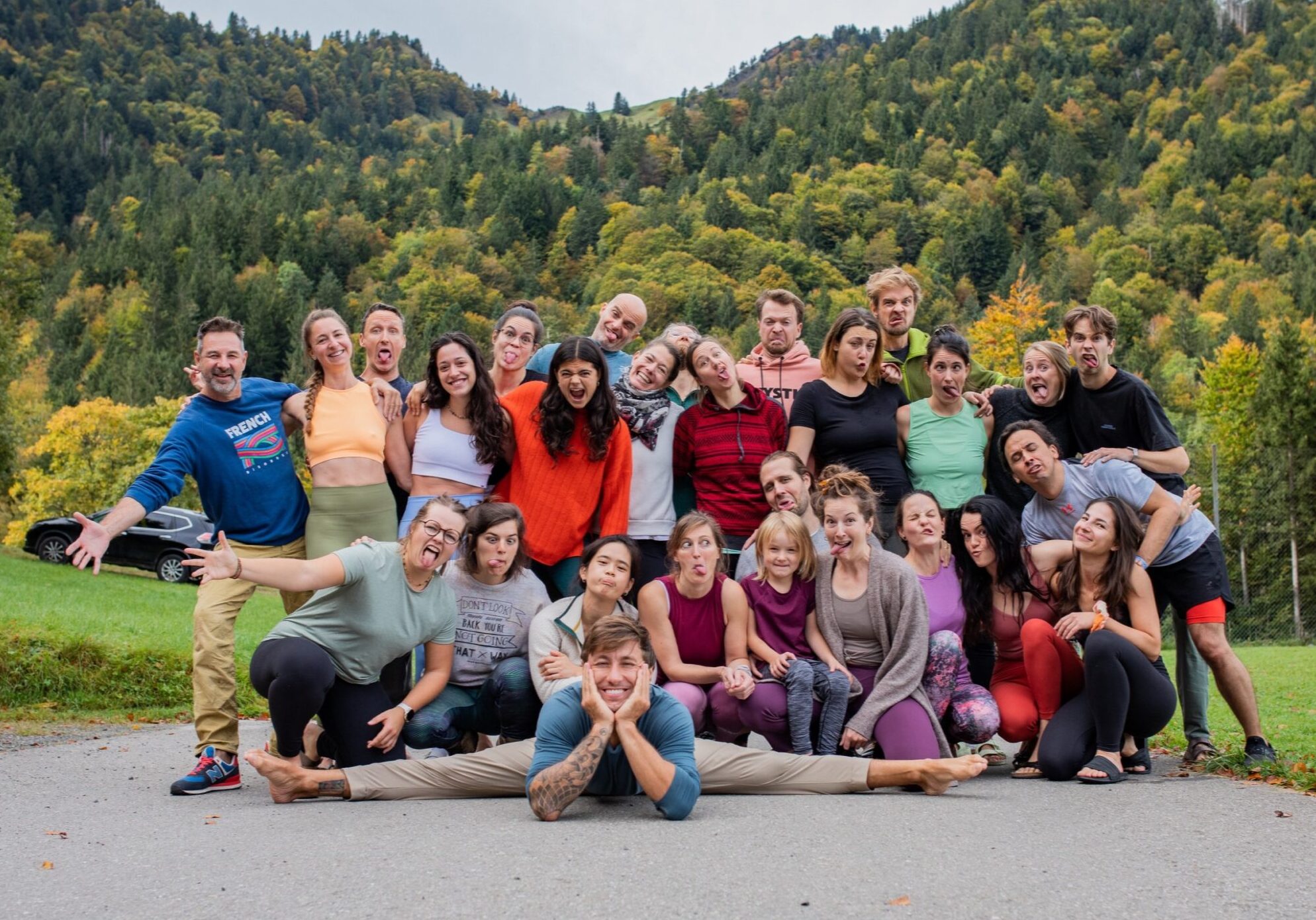
About Mountain Moves
Mountain Moves offers residential AcroYoga retreats in Switzerland. The focus is on community, quality teaching, and providing an inclusive and nurturing environment for learning and growth. We welcome participants of all levels, from complete beginner to more seasoned AcroYoga practitioners.